Sorting
Source
Books
(4)
Form of Work
Książki
(4)
Status
only on-site
(4)
Branch
Biblioteka Główna. Czytelnie
(4)
Author
Boyd Diane
(1)
Cooper Patricia M
(1)
Cunningham Andie (1963- )
(1)
Hallet Elaine
(1)
Hirst Nicky
(1)
Marsh Jackie
(1)
Shagoury Ruth (1950- )
(1)
Siraj-Blatchford John 1952-
(1)
Year
2010 - 2019
(1)
2000 - 2009
(3)
Country
Poland
(2)
England
(1)
unknown (us)
(1)
Language
English
(2)
Polish
(2)
Subject
CZYTANIE
(2)
JĘZYK ANGIELSKI
(2)
NAUCZANIE POCZĄTKOWE
(2)
CZYTANIE ze ZROZUMIENIEM
(1)
Edukacja ekologiczna
(1)
KULTURA CZYTANIA i PISANIA
(1)
MYŚLENIE TWÓRCZE
(1)
Nauczanie początkowe
(1)
PALEY, VIVIAN GUSSIN, (1929- )
(1)
Rozwój zrównoważony
(1)
Domain
Edukacja i pedagogika
(1)
Ochrona środowiska
(1)
Słowo kluczowe
early childhood education
(4)
English language
(2)
reading
(2)
Great Britain
(1)
Paley, Vivan Gussin
(1)
United States
(1)
case study
(1)
children
(1)
environmental education
(1)
fantasy
(1)
literacy
(1)
philosophy
(1)
play
(1)
reading comprehension
(1)
storytelling
(1)
sustainability
(1)
teaching
(1)
4 results Filter
Book
In basket
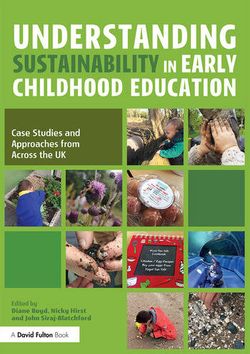
This unique book explores research related to education for sustainability within early childhood education in the United Kingdom. Divided into the four home nations, it examines what education for sustainability looks like in practice, discusses the different application and positions of each region, and considers the contribution of early childhood education to support the Sustainable Development Goals. Each chapter considers the relevant early years framework and includes associated case studies which highlight connections between statutory guidance, policy and positive early years pedagogical practice. The authors use an education for sustainability lens to explore the critical issues and explicit and implicit links embedded in each of the curricula frameworks. Each chapter acknowledges the context of outdoor learning with discussion related to different interpretations of ecological sustainability. This exploration should help readers to consider the idea of sustainability within early childhood education. The book considers early childhood education as a distinct and valuable phase beyond the readiness for school discourse and recognises the importance of having skilful and knowledgeable adults to work with young children from birth. It offers a unique resource for students, practitioners, leaders and researchers engaged in the study of education for sustainability in early childhood and the importance of the early years for the development of life-long pro-environmental attitudes.
This item is available in one branch. Expand information to see details.
Biblioteka Główna. Czytelnie
Copies are only available in the library: sygn. 22115.XXIV.14.8 [Czytelnia A] (1 egz.)
Book
In basket
Bibliogr. przy rozdz. Index.
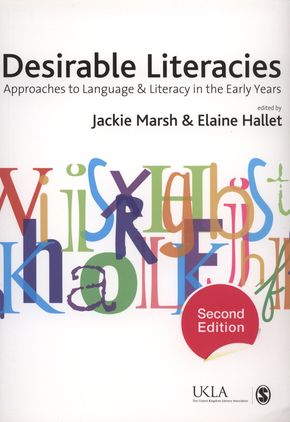
What are the ways in which young children learn to communicate? Collating their extensive experience of language and literacy in the early years, the contributors explore key aspects of this topic, linking practical ideas for early years settings and classrooms to relevant theory and research. This second edition is updated to take into account important developments in research, policy and practice, and now covers the 0-8 age range. It also addresses developments in new media and the impact this has upon literacy in young children, and offers chapters on new areas which have emerged in recent years, such as multimodality, media literacy, creative arts and literacy. Explored in the book are: the relationship between play and literacy; the role environmental print has in early literacy development; the language and literacy development of young bilinguals; ideas, suggestions and justifications for the use of poetry; a two-year research project, funded by Creative Partnerships; key issues relating to family literacy.
This item is available in one branch. Expand information to see details.
Biblioteka Główna. Czytelnie
Copies are only available in the library: sygn. 14539.XXIV.14 [Czytelnia A] (1 egz.)
No cover
Book
In basket
Bibliogr., index.
Teacher and author Vivian Paley is highly regarded by parents, educators, and other professionals for her original insights into such seemingly everyday issues as play, story, gender, and how young children think. In The Classrooms All Young Children Need, Patricia M. Cooper takes a synoptic view of Paley's many books and articles, charting the evolution of Paley's thinking while revealing the seminal characteristics of her teaching philosophy. This careful analysis leads Cooper to identify a pedagogical model organized around two complementary principles: a curriculum that promotes play and imagination, and the idea of classrooms as fair places where young children of every color, ability, and disposition are welcome. With timely attention paid to debates about the reduction in time for play in the early childhood classroom, the role of race in education, and No Child Left Behind, The Classrooms All Young Children Need will be embraced by anyone tasked with teaching our youngest pupils.
This item is available in one branch. Expand information to see details.
Biblioteka Główna. Czytelnie
Copies are only available in the library: sygn. 13940.XXIV.14.8 [Czytelnia A] (1 egz.)
Book
In basket
Bibliogr.
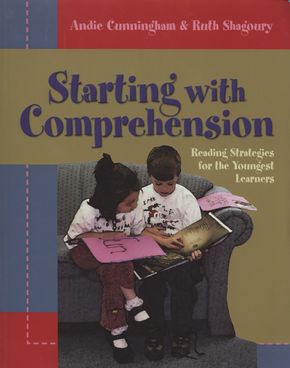
It is never too early to start comprehension instruction. In fact, reading begins with meaning making. Andie Cunningham and Ruth Shagoury designed a reading program for five- and six-year-olds based on this premise. Most of the students in Andie's Portland, Oregon, kindergarten class have little or no alphabet knowledge when they enter the classroom in the fall. English is a second-or third-language for many of the children in this low-income neighborhood. Through research-based principles, carefully structured routines, and innovative activities, even the youngest learners can develop comprehension skills from their first days in school. The children in Starting with Comprehension are grappling with school culture for the first time and learning to work with classmates who speak a variety of different languages. These emergent readers learn to present their understanding of what they read through writing, talk, movement, and art. Kindergartners and preschoolers are different from readers who know how to decode texts. Andie and Ruth show how comprehension skills can be nurtured and strengthened even before decoding begins. In this classroom, meaning making becomes part of community building as children link reading, thinking, and communicating.
This item is available in one branch. Expand information to see details.
Biblioteka Główna. Czytelnie
Copies are only available in the library: sygn. 14524.XXIV.14.8 [Czytelnia A] (1 egz.)
The item has been added to the basket. If you don't know what the basket is for, click here for details.
Do not show it again